This year I have taken on growing a Brown Turkish Fig in my garden. This is a Fig that is known for its great flavor and golden-brown fruit and grows well in the PNW producing a breba crop.
There are hundreds of varieties of figs to choose from, below I have listed a few common ones that are easy to grow and taste great.
Did you know you can propagate fig trees by taking a cutting on one and propagating to grow another fig tree?
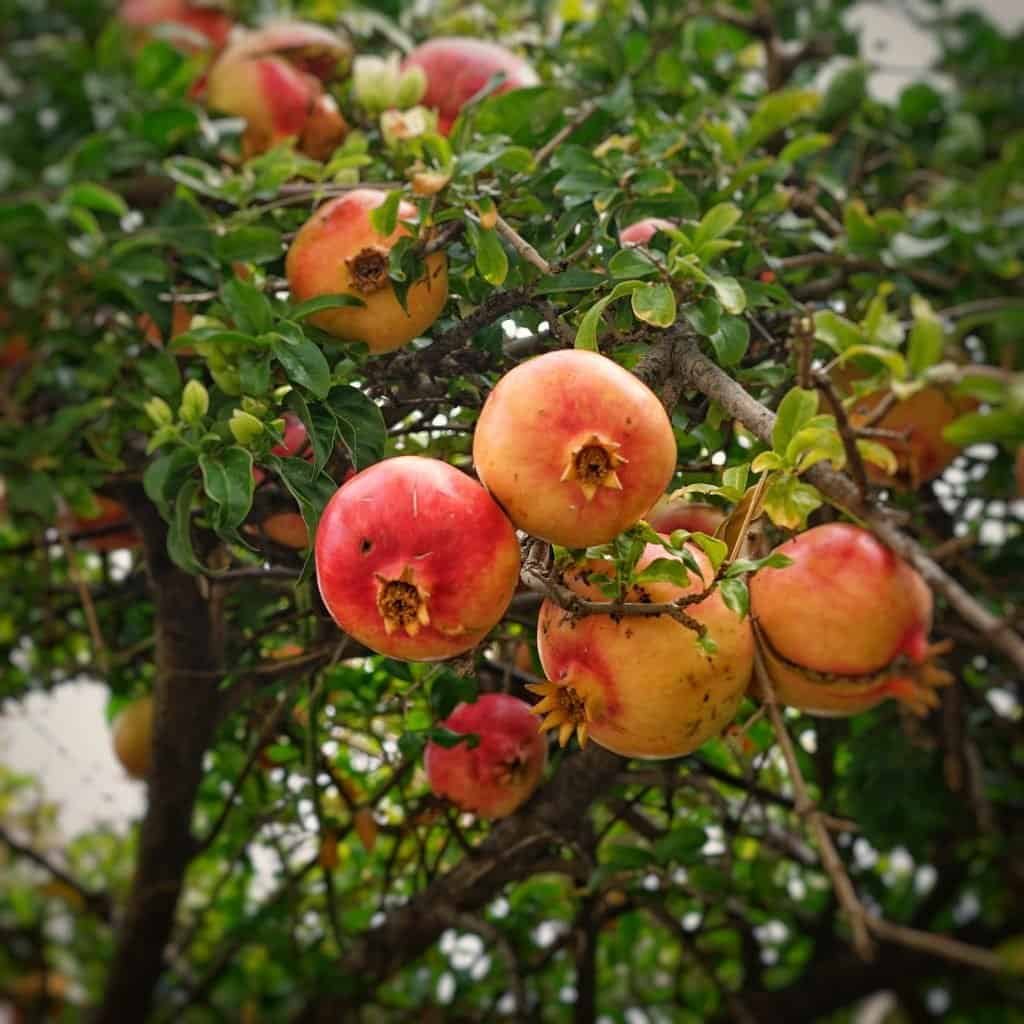
Like my pomegranate it is a smaller tree so it most likely will not have fruit this year, continue to watch as I post updates on the progress of my Fig growing in the Northwest.
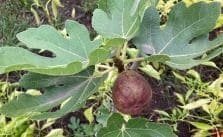
The first year my fig bush had one fig don’t worry if it takes a few years to get a good crop for you to enjoy.
In my second year the fig tree grew tremendously and produced two figs, here is the first one I grew and it tasted great. I highly recommend you grow this variety of fig in your garden.

I have met someone that is very knowledgeable and I will be trying to grow some new varieties that can withstand the cooler temperatures of the PNW. The newest one that I will be starting from cuttings this year is the Desert King Fig.
You can grow figs in containers that can be brought in during the coolest winter temperatures.
Below I will explain how to grow the best figs and even the varieties I would recommend growing.
How to Grow the Best Figs: Varieties to Grow
Brown Turkey
This is an easy fig to grow in cooler climates and can be pruned since they can grow to 20 feet tall if left unpruned. They have brown to purple outer skin and reveal pinkish flesh that is sweet. They can be grown from cuttings and when mature they have a shallow root system that can be seen on the surface of the soil.
Desert King
This is a variety that grows well in the PNW and can be found frequently. It has green skin that turns lighter and shades of yellow when ripe. It is one of the larger figs and has a great sweet fig flavor.
Celeste
This is a medium size fig that has brown to purple skin with pink flesh and is very sweet in flavor. They are disease resistant and very hardy living in cooler climates down to zone 6 and 7. Like all figs, they like a sunny location and tolerate the heat as well as the cold. They do not require much pruning and grow to 6-8 feet tall.
White Madeira
This fig has a very sweet flavor with hints of strawberries. It is from the Greek island of Portugal. It has yellow/green skin with a long neck and interior bright red and very juicy.
White Kadota
This is a very sweet fig that has a thick skin yellow in color and is a good fig to grow in the Northwest. This fig tree is one of the largest commercially grown figs and is used in making fig Newton cookies. The fig has few seeds and is a great fig to eat fresh off the tree.
While I have listed a few of the figs I have heard grow well in PNW there are many, many more to choose from, and if you are fortunate to have a place to move them indoors in the winter you can find many more such as Verte Strawberry which has a great strawberry flavor.
Planting and Care of Figs
Most fig trees need to be planted in full sun and allowed to grow from 6 feet to more than 20 feet tall. They like a well-draining soil that is fertile and they enjoy a top dressing around the tree to protect the shallow roots.
Water consistently and deep watering every 10-14 days is adequate since they do not like a wet soil.
Fertilize them twice a year once in the spring before the leaves appear and again in late summer with a 10-10-10 organic fertilizer.
If temperatures are going to approach 10 degrees ferenheight you should protect with frost cover or other protection.
Pruning details
To get the most fruit on your fig it is important to get more lateral branches since the fruit will grow in the crotch of the main stem and the lateral branch on first year growth. It is important to send energy to the lower nodes on a lateral branch to promote more lateral branches. To open the shape of the tree you can prune off the lowest branches if they touch the ground.
You can top the tree if the main stems are getting very long without many lateral branches which will promote more lateral branches.
When you prune a branch prune about 1/2 an inch above a node that will promote a branch to grow.
It is also good to thin out older 3 and 4 year old growth to allow good air flow and increase new growth.
Pruning fig trees depends on the variety, some figs do not require much pruning while others need to be pruned each year. Best to prune fig trees in January through early March when they are still dormant. Figs produce fruit on the last year’s limbs and is best to open up the center of the tree to allow good airflow. Some figs like Desert King set Breba fruit on the year before so do not prune much if any.
It is good to allow several trunks and not try to grow with one trunk to get the most fruit.
Pests
Pests that you need to watch for with fig trees. Sucking bugs can attack your fig’s nematodes, aphids, and sucking beetles are the worst pests that you need to avoid. Neem oil is a very good organic way to treat for pests.
Squirrels and birds love to eat ripe figs so you may need to net your tree to keep them away from the fruit. Another option when getting a smaller crop is to wrap the figs in tulle to prevent pests from eating the crop.
Harvesting your Figs
You can usually get two crops of figs each year one in early summer known as the Breba crop, and the other in late summer to early fall in the PNW these may not ripen and sometimes they will ripen the next year. Figs are ripe when they are soft to the touch. Depending on the variety they will turn from green to brown/purple in color when ripe or dark green to lighter green and yellow. They will also droop down when ready to harvest.
Do not pick your figs when green expecting them to ripen, they will not ripen after picking. Allow the figs to ripen fully on the tree to get the sweetest fruit.
Figs will last from 7-10 days after harvesting but are best eaten right away or can be frozen hole to enjoy in the winter.
You can wash the figs and dry them in a dehydrator before freezing them for use later too, they can last 1-2 years in the freezer.
If they are too old to eat the skin will collapse and a watery juice will be released with an odor of rotting fruit. Dispose of these as they are not good to eat.
Propagating Figs
The best time to take cuttings to propagate your figs is in December or January. Harvest branches that are about as big around as your finger and cuttings can be made into 5-8 inch cuttings with 4-6 buds (see pictures)
Once you have the cuttings you should trim the top if cut (45-degree angle cut) has been made otherwise you can leave the top bud on propagation. The lower cut should be made just above the bud, next strip the outer bark with a knife to promote rooting.
On the rooting end dip it in a rooting compound to help promote rooting.
Use a small clear plastic bag to fill with moistened indoor seed-starting soil. Use a pencil or another object to make a hole in the soil deep enough to cover two buds for the fig stem. Compress the bag to ensure good contact between the soil and the stem dipped in the rooting compound.
Use a rubber band to secure the bag to prevent any moisture loss while the propagation is rooting.
Place these cuttings in a tub to keep them dark in a warm dry location. They will take 1-3 weeks to sprout leaves and roots once the leaves appear you can remove them from the tubs in the dark area to put them under grow lights to develop stronger roots, and wrap the portion of the dirt that is in plastic with a towel to keep them in the dark to promote root growth.
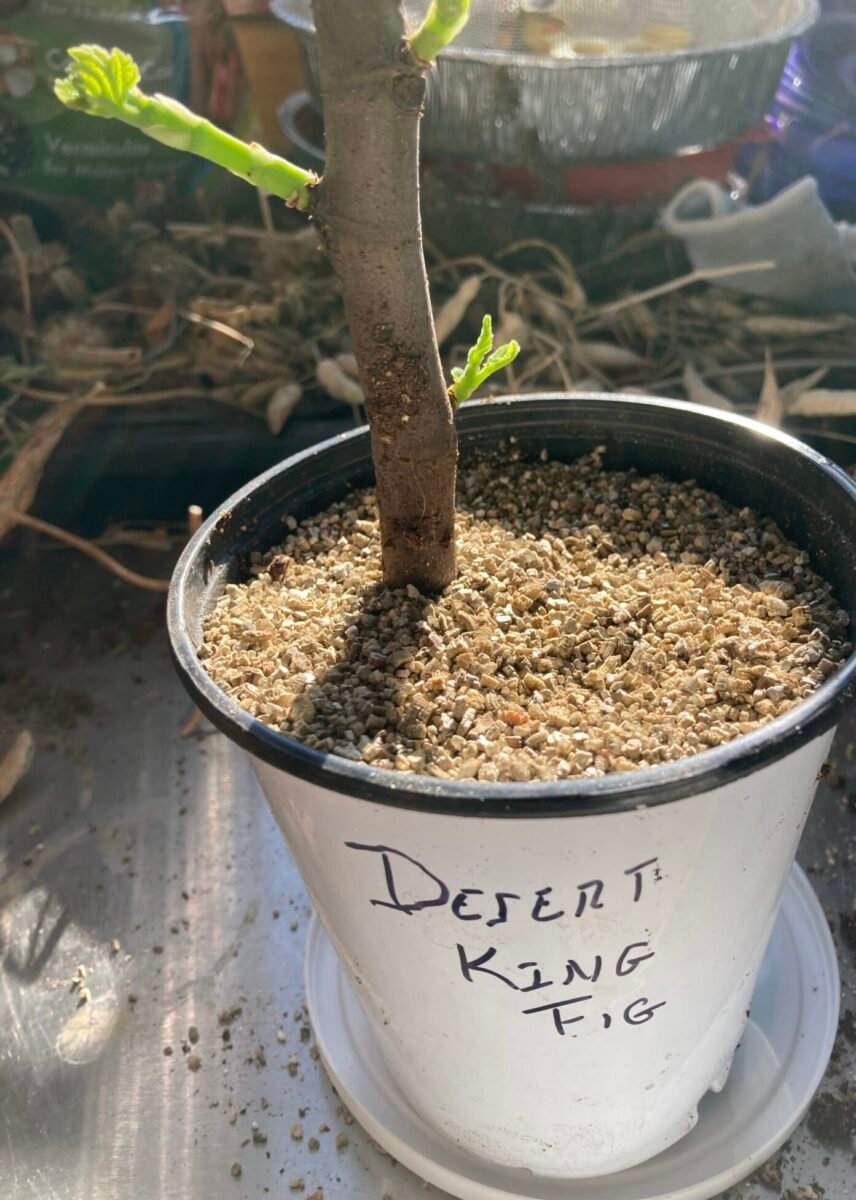
Once they have sprouted leaves and have a good root system showing in the clear bag it is time to up-pot to larger contain and place them under grow lights until it is time to plant outdoors.
If your Fig Propagation has a new fruit grow you should remove it to send energy to root and plant growth since the fruit will not be sweet to eat when it develops.

Best use of Figs
Jams
Chutney
Eaten Fresh off the tree
Grilled to add to salads
Grilled to add as a side with Meats
Cake
Side with Cheese and Bread
Fig Newton Cookie
Added to Pizza
Now that you have seen how to grow the best figs and how easy it can be, you need to get started growing your own figs and experiment with the enormous number of varieties of figs to find the one you enjoy most.
Keep checking back in for updates on my fig-growing progress to learn tips and tricks to help you grow your own figs.
Updates
As of July in the 2nd year of growing my Brown Turkish Fig, we are seeing an amazing amount of growth on the fig but no figs yet. I am fine with the energy of the plant going to growth and not fruit yet.
1st year one fig, second ye3ar 2 figs and lots of new growth.